None of the balances in the previous piece is an end in itself. Standardizing, preserving, protecting and not retraining more than necessary are not technical virtues pursued for their own sake. They are means. The end is the operation, and the operation asks for concrete things.
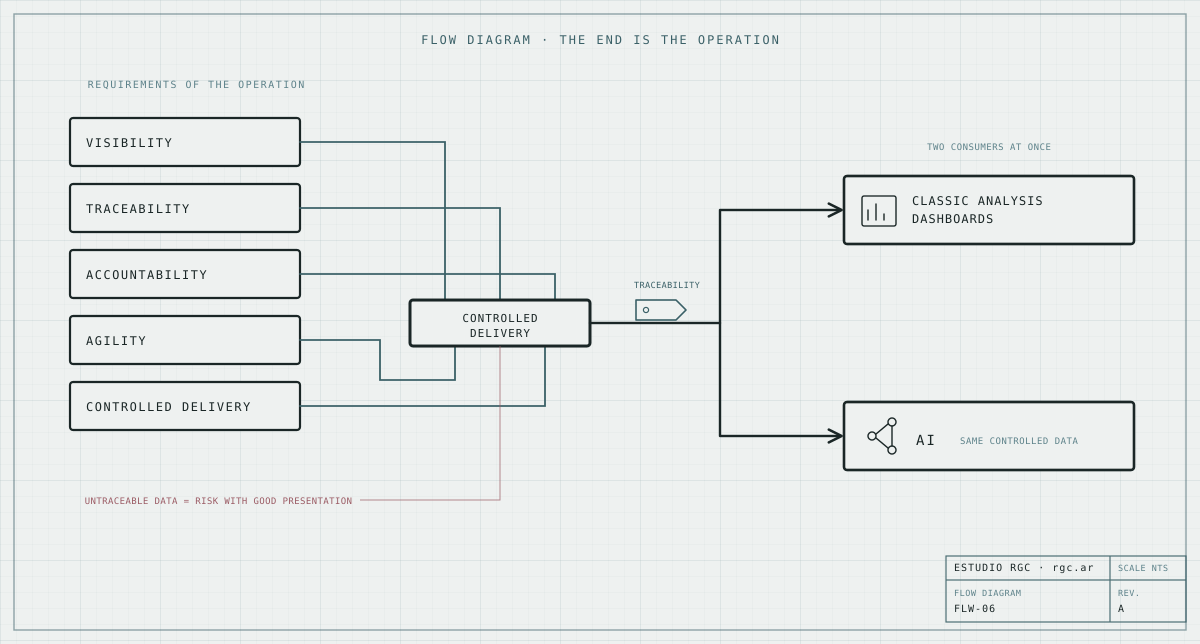
It asks for visibility: being able to see the real state of what is happening, without reconstructing it by hand cross-checking spreadsheets. It asks for traceability: being able to follow a piece of data from where it was entered to where it was decided upon, and knowing why two reports say what they say. It asks for accountability: every number having an owner and an origin, and decisions being defensible. It asks for agility: being able to change a process without changing it costing a year, because the operation does not wait. And it asks for controlled delivery of information: that multidimensional information reaches whoever has to receive it, securely, and when needed confidentially, without reaching whoever it should not.
That last piece is the one that orders everything else. A modernized ecosystem is not the one with the newest platform. It is the one that can deliver the right information, to the right person, with the right control, so they can analyze it. And today that information feeds two consumers at once: the classic analysis of always, dashboards and reports, and analysis based on artificial intelligence. Both need the same thing underneath: data with context, with traceability, with clear permissions. An AI model built on data no one can trace is not an asset, it is a risk with good packaging. The modernization strategy is, among other things, what makes that data deserve the trust that will later be asked of it.
One last question remains: what, day to day, is the point of having a strategy. The answer is uncomfortable and the next piece closes it.